
Pickaway County Criminal Docket Searches
Every Pickaway County criminal docket search begins with the court split. For adult felony cases, the Common Pleas CourtView gateway is the place to look. Agree to its terms, pass a CAPTCHA, and the case inquiry search opens. Adult misdemeanors and traffic matters anywhere in Pickaway County run through the Circleville Municipal Court Record Search. It covers the whole county despite the Circleville name.
Use the court-assigned case number when you have it. A name search can get you started. But check any match for court, case type, and event date before you rely on it. CourtView does not publish its post-CAPTCHA search fields. So this page leaves field names alone rather than guessing.
- Decide whether the matter is an adult felony, an adult misdemeanor, or a juvenile matter before opening a portal.
- For a felony, accept the CourtView terms and use the Common Pleas case inquiry path. For a misdemeanor, select the Traffic/Criminal option in Circleville Record Search.
- Search with the most specific available identifier, then open the matching case record and preserve the case number, court, and visible event date.
- Read the event history for notices, settings, motions, and signed entries. A filing label is not a ruling by itself.
- Request the exact pleading or entry from the appropriate clerk if a verified copy is needed.
Note: Ohio has no single statewide public docket search for trial courts. Moving between county portals is usually the right next step.
Pickaway County Criminal Docket Portal Split
The Pickaway County Court of Common Pleas handles adult felonies. Its CourtView system calls the public tool a case inquiry search. It draws case information from computerized Common Pleas records. Adult misdemeanors go to Circleville Municipal Court instead. These are separate databases. So an empty result in one tells you nothing about the other.
The official Common Pleas court page also names the General Division. That division works with the Clerk's Legal Department on felony dockets.
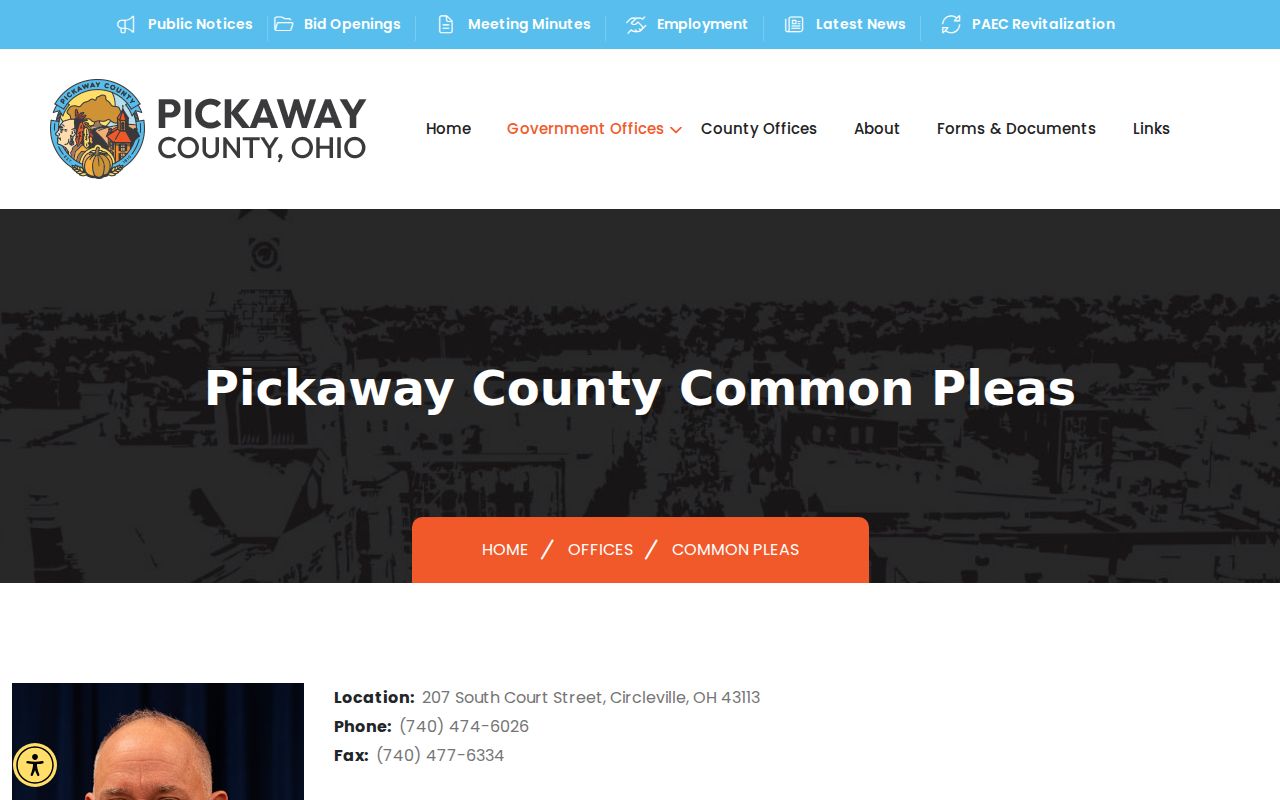
That county route matters most for indictments, grand-jury felony filings, and later Common Pleas entries. Those records live with the county court, not the municipal one.
Criminal Dockets: What They Show
Think of a docket as an event log. It is not a story of the case. Pickaway's two systems expose different search fields. Circleville's form offers case number, filing date, hearing date, case type, and a Name/Company search, but it cannot be counted on to show every balance, judge, attorney, or document detail. CourtView states that available documents on file may be accessed and printed, subject to legal exclusions and redactions. Read what is there rather than assuming what is not.
| Case number | The court identifier used to distinguish the proceeding. Circleville’s visible form accepts a case-number query of up to eight characters; no universal Pickaway criminal format is published. |
|---|---|
| Case and court type | Common Pleas felony, Circleville Traffic/Criminal, or a separate Juvenile record route determines where the docket belongs. |
| Event and filing date | Dates help separate a newly filed pleading from a notice, scheduled appearance, later entry, or disposition. |
| Setting information | A hearing or pretrial date may appear as a search field or docket event, but a later entry can change it. |
| Available document | An online image, where offered, is not a promise that all case papers, discovery, or restricted material are remotely displayed. |
Keep the exact spelling from the search and the title of any pleading. Those small details make a later records request far more precise than asking for the whole criminal file.
Pickaway County Criminal Docket Terms
The Clerk's Legal Department logs criminal-file activity such as summonses, subpoenas, warrants, capiases, and felony pleadings. Pickaway publishes no local abbreviation key, so spell terms out rather than importing codes from another Ohio court. Always read a label with its date and the entries that follow it.
- Arraignment
- An early criminal appearance. Pickaway’s local rules provide that a criminal pretrial is scheduled at arraignment.
- Pretrial conference
- A court-directed event before trial, not a final disposition.
- Capias
- An event label that must be checked against the current docket and court information rather than treated as proof of present status.
- Journal entry
- The formal written court action filed after signing. It is stronger confirmation than a calendar listing or an oral description.
The Clerk’s Legal Department distinguishes its criminal, civil, domestic relations, appeals, and records work.
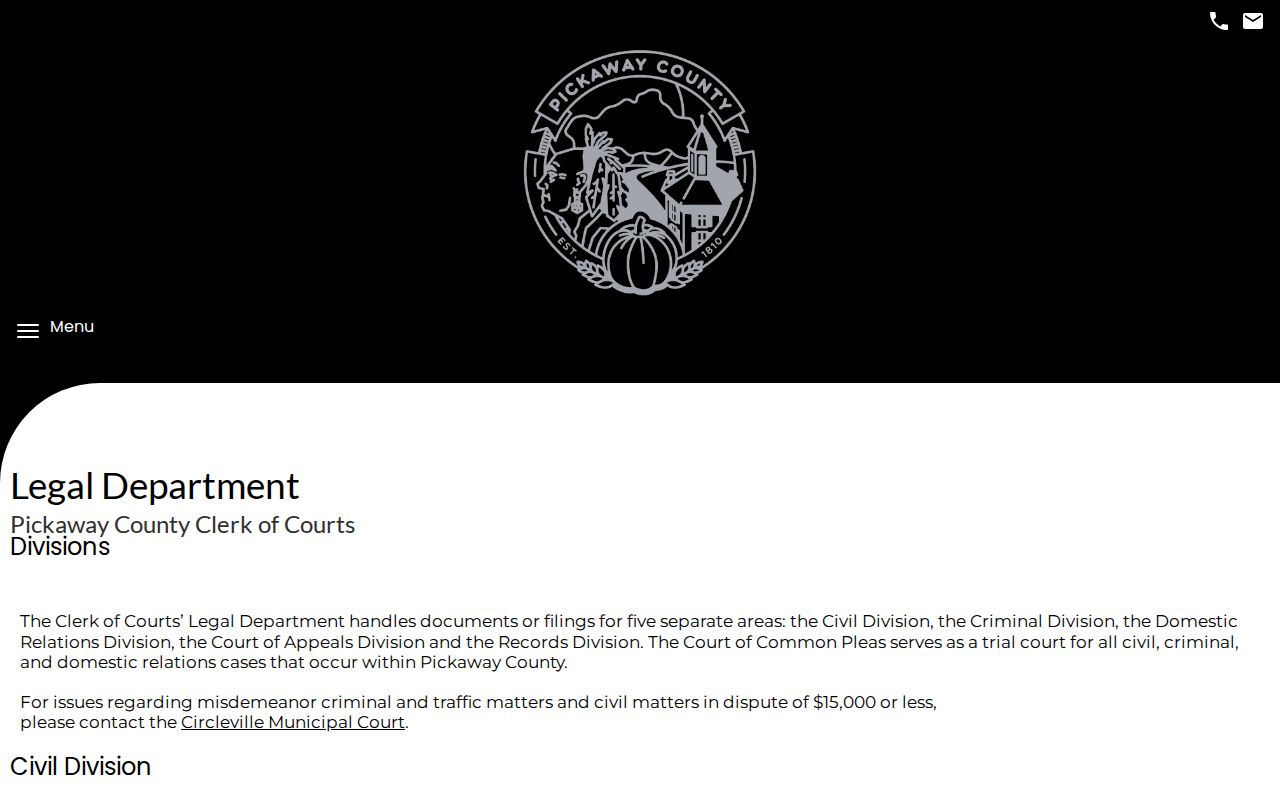
This division-based setup is why the right court and document title matter so much when tracing a criminal docket entry.
Criminal Case Stages on the Docket
A felony docket may open with a complaint and bindover, or with an indictment. The Common Pleas rules set arraignment early in the case. They also schedule the criminal pretrial at that point. Motions raising certain defenses or objections are generally due before trial. The court may allow a later filing. Each step leaves its own kind of entry. That is why a case should be read in order. One search result line can never tell the whole story.
Docket flow: Complaint, bindover, or indictment › arraignment › pretrial › motion practice › plea or trial › signed disposition or sentencing entry.
A written continuance request must state its reasons and attach a proposed entry under the local rules. Even when both sides agree, the setting does not change by itself. The signed order or notice controls, not a rough date calculation.
Pickaway County Criminal Docket Pretrial Check
Scheduling the criminal pretrial at arraignment is a local rule. It is not a stand-in for the actual notice. Start with the online docket. Then read the newest notice or signed entry for the date and time. If the portal looks incomplete, use the record request or a court-specific contact channel. Do not assume an old setting still stands.
Phone limit: The CourtView gateway says office staff do not perform record searches or provide dispositions or case information by telephone. A phone call cannot replace the docket, clerk copy, or current court notice.
To request a document from the Common Pleas Clerk, the public-records policy asks for the case number, party name, pleading title, and filing date. Email, mail, and in-person routes are all listed. Preparation can take up to three to five business days. Mail or in-person copies cost $0.10 per page with a $2 minimum. Email transmission carries no charge.
Pickaway County Criminal Docket Courts
Adult felonies in Pickaway County run through the Court of Common Pleas, General Division. The Clerk Legal Department keeps those files. Misdemeanors and traffic cases are different. Circleville Municipal Court handles them for the whole county. So a case from a village miles from the city still lands in the municipal Record Search. Grabbing a case number from one court tells you nothing about where to look next. The two portals do not trade dockets.
Juvenile matters sit on their own track. Delinquency and juvenile traffic cases belong to the Pickaway County Probate & Juvenile Court. It runs a separate search channel through CaseLook. That notice warns that postings can lag at least 24 hours or longer after a filing or judicial action. It also points anyone wanting verified information back to the court itself. Access to juvenile files is controlled on its own terms. A search lead that shows up does not mean the juvenile file is public.
Pickaway County Criminal Docket Specialty Track
Pickaway Common Pleas Local Rule 21 creates the Pickaway Drug Court. It serves qualifying felony defendants with substance-use disorder. Entry depends on legal review, clinical review, and court acceptance. Once a person is in, new entries can appear. They may cover reviews, conditions, acceptance, or disposition inside the underlying criminal case. None of that turns a generic search result into a separate public conclusion.
For a particular status, go to the official Common Pleas Local Rules, the case record, or the court itself. When a docket mentions a program, read the order or entry tied to it. Respect any access limit the court sets. A short portal description cannot fill the gaps.
Access Rules for Criminal Dockets
Ohio's public-record framework lets people inspect public court records. Remote display and full disclosure are separate questions. CourtView states plainly that some documents are unavailable online. It cites redaction as a privacy safeguard. The Clerk policy backs that up with examples of what can be restricted or redacted. The list includes grand-jury material, sealed records, Social Security numbers, medical records, ongoing-investigation records, and specified protected personal information. So a docket entry may exist anyway. The document behind it can stay off screen. What you can see online is not the whole court file.
Key rules:
Ohio Revised Code 149.43 requires public-record access procedures, permits lawful redaction, and requires the legal basis for a denial.
Ohio Revised Code 2303.901 includes Common Pleas dockets, case files, indexes, and journals in court records while protecting personal identifiers and restricted information.
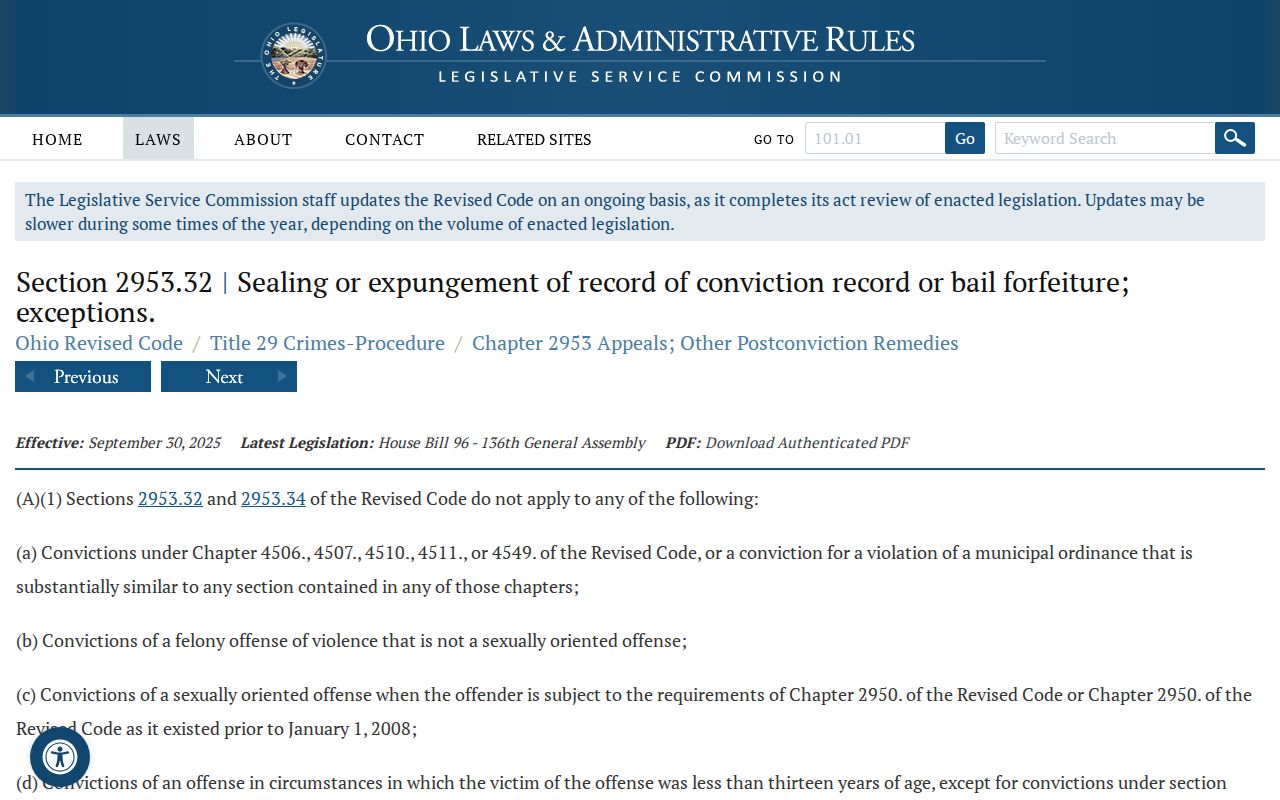
Ohio Revised Code 2953.32 governs sealing and expungement applications and orders involving conviction records.
A blank result in a docket search does not clear anyone. Sealed or expunged cases stay out of view, and the official sealing and expungement statute explains why that can happen.
When a record is withheld or redacted, ask for the releasable version. Name the document specifically, and if the court still holds it back, request the written basis for that decision.
Pickaway County Criminal Docket Appeal Route
An appeal never shares a docket with the trial case. It gets its own docket and its own case number. The Clerk's Legal Department explains the route. Appeals from Common Pleas, Juvenile and Probate, and Municipal Court matters go through the Ohio Fourth District Court of Appeals route. Keep the trial-court number close. Use the trial docket for the original filings and entries. Then switch to appellate procedures for appellate events.
A notice of appeal sitting on a trial docket does not merge the two records. The trial-court docket stays the place to review the original criminal proceeding. The appeal carries its own timeline and record activity. Note the date of the notice of appeal. Also note any record or transcript entry in the trial case. Those markers separate the original proceeding from the later appellate work. Assume nothing about a municipal or Common Pleas search displaying appellate events. It will not.